


Organic search drives 53% of all website traffic, while the top organic result captures roughly 28% of clicks. At the same time, many businesses invest $9,000–$10,000 per month in Google Ads to secure immediate visibility. With AI Overviews reducing top-funnel clicks and paid CTRs declining, relying on a single channel is no longer effective.
Leading brands recognize that SEO and paid search serve different purposes and work best together. This article explains why successful companies combine both, how each supports different stages of the funnel, and what it takes to build an integrated strategy that maximizes long-term results.

Why Top Brands Don’t Choose Between SEO and Paid Search
Smart brands know that choosing between SEO and paid search creates a false dilemma. These channels serve different yet complementary purposes in a detailed digital strategy, and leading companies understand this well.
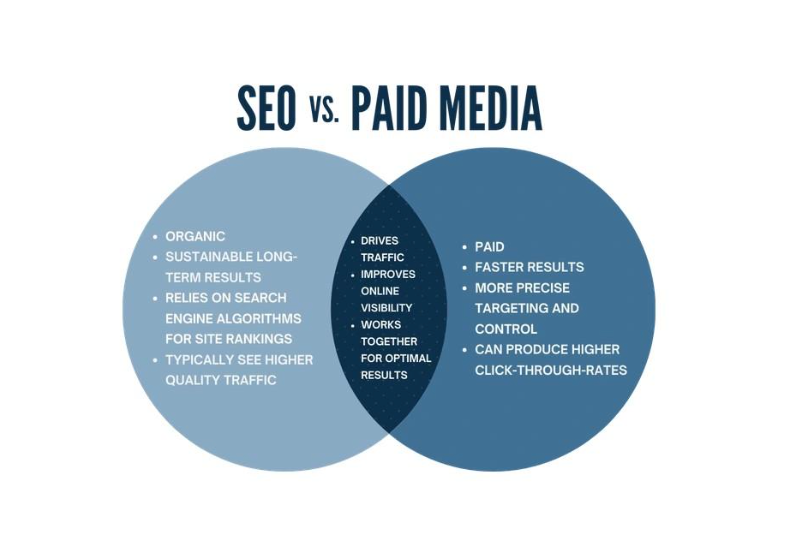
The difference between SEO and paid search
SEO helps earn visibility by optimizing your website to rank in organic search results. Results take months to develop, not days, which requires patience. Organic rankings build lasting value that continues working without direct payment per click.
Paid search delivers instant visibility through auction-based ad placements. Your brand gets immediate exposure but costs money for each click. Your visibility disappears the moment you stop funding campaigns—this creates a fundamental difference in long-term sustainability between these approaches.
Why relying on one channel limits growth
Algorithm changes can make you vulnerable when you depend only on organic search. This creates blind spots in your marketing funnel. Building organic visibility takes months and leaves immediate opportunities untapped.
Businesses that rely only on paid search face unsustainable cost structures. Ad costs grow faster than revenue as your business expands. Strong organic presence brings credibility and trust advantages that you miss with paid search alone.
How combining both creates a compounding effect
When SEO and paid search are aligned, their strengths reinforce each other and create outcomes that outperform single-channel strategies:
- Paid campaigns provide immediate keyword performance insights, helping teams validate intent and guide long-term SEO investments with real data.
- As organic rankings improve for priority terms, paid budgets can be reallocated toward new growth opportunities instead of maintaining redundant coverage.
- Brand presence becomes stronger when users see the same company in both paid and organic results, which increases trust and overall click-through rates.
- Paid search captures high-intent, purchase-ready traffic, while SEO builds awareness and credibility across earlier stages of the customer journey.
- Leading digital brands treat these channels as complementary tools, achieving results that exceed what either SEO or paid search could deliver on its own.
How SEO and Paid Search Work Together Across the Funnel
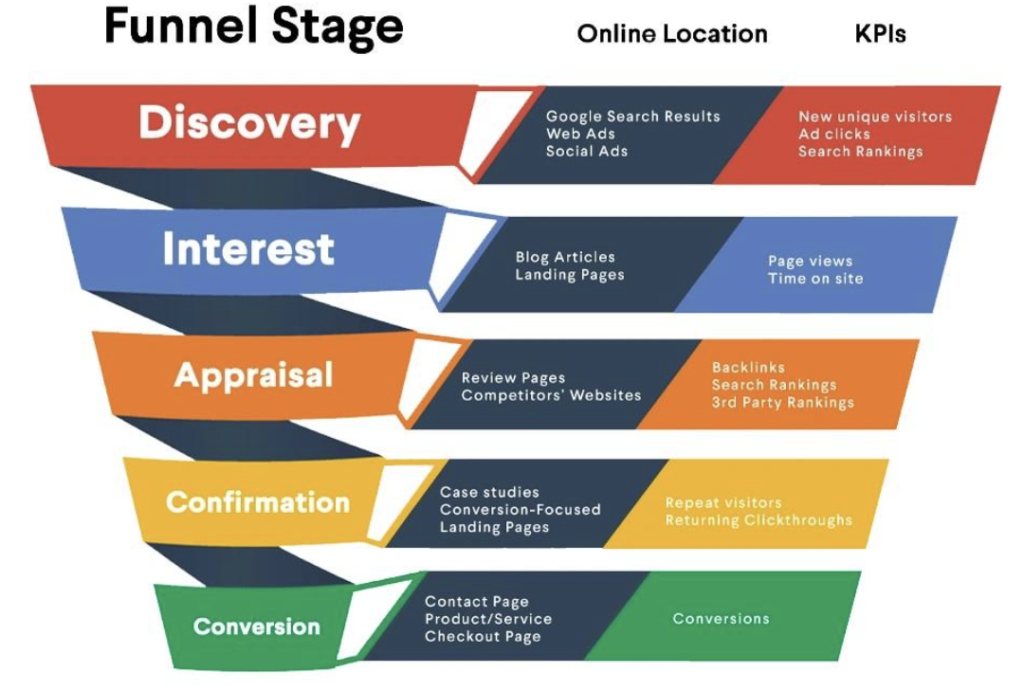
The marketing funnel acts as a framework where SEO and paid search play different but complementary roles. You can achieve better results when these channels work together through different stages than either channel could deliver alone. Experts from Atropos Digital white label SEO agency, point out that aligning SEO and paid search across the funnel helps brands maintain consistent visibility while using performance data more efficiently at each decision stage.
Let’s break down how this works across each stage of the funnel.
Top-of-funnel: SEO for discovery, paid for reach
Search engines work like problem-solving tools at the awareness stage as users type their questions. Your brand becomes a helpful resource when SEO attracts prospects through educational content that answers basic questions.
Paid search helps you reach broad audiences quickly, which proves valuable for new campaigns that haven’t built organic visibility yet. This combined method gives you maximum visibility. Studies reveal that PPC ads show up at the top of 48.6% of search results, letting brands grab attention right away.
Mid-funnel: Messaging and retargeting
Prospects look for specific solution details as they review their options. The power of integration shows through shared data at this stage. While SEO content builds deeper connections, paid search lets you reconnect with visitors who found you through organic search.
This approach works well because these users know your brand and have moved further in the marketing funnel, making them more likely to convert. Your brand builds trust and authority when you keep messaging consistent across both channels during this phase.
Bottom-funnel: Conversion optimization through synergy
Brands that show up in both organic and paid positions create a strong impression near conversion. Users trust brands more when they appear in multiple SERP spots, according to research.
This multiplies your credibility instead of just doubling visibility. Customer acquisition costs drop by 20% when SEO sessions match 50% of paid search traffic. The costs can fall by 60% when SEO delivers all the sessions compared to paid. These numbers show how combining both channels gives you better conversion rates and streamlines processes.
Building a Unified Strategy: Steps to Integration
A successful integrated search strategy requires careful planning, consistent execution, and a clear understanding of how SEO and paid search influence one another.
When managed as a single system, efficiency improves across both channels and insights compound over time:
- Begin with a full audit of both SEO and paid search performance to understand where each channel currently stands. An SEO audit should evaluate technical health, on-page optimization, content quality, and backlink profiles to identify strengths and gaps.
At the same time, a PPC audit should review campaign structure, ad group organization, keyword segmentation, targeting settings, and bidding strategies to uncover inefficiencies and missed opportunities.
- Identify keyword opportunities that overlap or underperform across channels. Using tools such as keyword gap analysis helps surface these opportunities. Grouping keywords by intent and semantic relevance makes it easier to decide where SEO should build long-term value and where paid search should provide immediate coverage.
- Align landing pages so they support both organic and paid traffic without competing against themselves. Unified landing pages built around shared intent tend to perform better than separate pages created in isolation.
Incorporating insights from paid campaigns—such as proven messaging or high-converting terms—into landing page content can reduce cost-per-click, sometimes dramatically, while maintaining consistency between ads and organic listings.
- Use paid search data as a testing environment for SEO content decisions. PPC campaigns generate fast feedback on which headlines, descriptions, and value propositions resonate most with users.
High-performing ad copy can inform SEO titles and meta descriptions, while search term reports often reveal new keyword variations and content topics worth targeting organically.
- Apply insights from organic search performance to refine paid campaigns. SEO data highlights emerging search trends, shifts in user intent, and content formats that attract sustained engagement.
Top-performing organic pages can guide ad messaging, keyword expansion, and intent-based targeting in paid search. This two-way exchange creates a feedback loop where each channel continuously improves the other.
The Long-Term Payoff of SEO and Paid Search Integration
SEO integration with paid search creates financial benefits that go way beyond the original performance gains. Companies that combine these channels strategically see substantial long-term advantages that boost their bottom line.
Lower customer acquisition cost (CAC)
The right balance between organic and paid efforts leads to dramatic drops in CAC. Studies show that companies see a 20% reduction in CAC when their SEO sessions hit 50% of paid search traffic volume. The numbers get even better. CAC can drop by 60% when SEO traffic matches paid search volume. Companies can put these savings into other growth projects.
Improved return on ad spend (ROAS)
Smart integration does more than save money – it boosts marketing returns. Brands can cut unnecessary ad spending on keywords that already rank well organically. They can then move that budget to areas with better potential.
This optimization creates a ripple effect. One e-commerce brand’s integrated approach led to 40% higher average order values and 500% better ROI compared to using paid search by itself.
Greater brand visibility and trust
Your brand’s credibility grows substantially when you show up in multiple search positions. Users trust companies more when they see them in both paid and organic listings. This also establishes you as an industry leader. Plus, your dual presence pushes competitors down in the results and expands your digital reach.
Conclusion
Combining SEO and paid search consistently delivers stronger results than using either channel alone. Each plays a distinct role: SEO builds long-term credibility and sustainable traffic, while paid search provides immediate visibility and precise control. Together, they support every stage of the customer journey.
This integrated approach lowers customer acquisition costs, improves ad efficiency, and strengthens brand trust through consistent SERP presence. It also creates resilience, allowing businesses to stay visible during algorithm updates or periods of rising ad costs.
The path forward is clear. Audit both channels, align keyword strategies, unify landing pages, and let data flow between paid and organic efforts. Brands that treat SEO and paid search as complementary tools—not competing tactics—build stronger, more stable growth over time.