


Even small improvements in customer service can lead to significant financial gains. Reducing customer churn and encouraging repeat spending often translates into millions of dollars in added revenue over time.
Experience shows that scaling customer support effectively plays a major role in long term business success. Many support teams struggle with limited access to customer information, which makes it harder to resolve issues quickly and confidently. When agents lack context, conversations become frustrating, and customers often finish interactions feeling stressed or drained rather than supported.
Despite these challenges, the outlook remains strong for growing businesses. Organizations that scale support through the right outsourcing approach frequently see higher returns while lowering overall operating costs. Savings extend beyond staffing and often include reduced spending on office space, infrastructure, equipment, and ongoing overhead.
This article outlines a practical framework for scaling customer support in a sustainable way. It covers how to recognize the right moment to scale, how to build efficient systems, and how to select an outsourcing partner that aligns with your goals. With the right approach, customer support can become a driver of growth rather than a growing pain.

Understand When and Why to Scale
Scaling your customer support needs more than just hiring agents when tickets pile up. You need to spot the perfect moment to expand and make smart moves about it.
Identify growth triggers like product launches or market expansion
Smart businesses know that product launches often create big spikes in support volume. Research shows that 58% of customer care leaders expect call volumes to rise over the next 18 months. A specialized support team during product launches helps maintain excellent service standards. One company proved this works – they scored an impressive 95.1% customer satisfaction rating while handling complex queries about their new product.
Expanding into new markets creates another reason to scale support. New regions bring their own challenges because each country has its own employment rules and cultural expectations. Companies that switch from single-source to multiple regional relationships must guide these differences carefully to keep their reputation strong and maintain customer trust.
Several signs point to the right time for scaling: steady profits over years, growing product demand, and available outside investment. These indicators show your business has enough financial stability to build better customer service.
Analyze support metrics to detect bottlenecks
Knowing exactly when to scale customer support requires tracking specific metrics. High ticket volumes mean you need more agents or should fix potential UI/UX issues. Your team should watch these most important performance indicators:
- Response times – Long wait times point to a bottleneck
- First contact resolution rate – Better resolution rates show team effectiveness
- Customer effort score – Shows how smoothly customers interact at every touchpoint
- Customer satisfaction and NPS – Low scores might mean you’re understaffed
Support teams without good tools and systems might become “viral sensations (not in a good way)” or lose potential customers. Americans take this seriously – 33% would switch companies after just one bad service experience. Finding bottlenecks early helps time your support team expansion right and protects your reputation.
Evaluate Internal Readiness
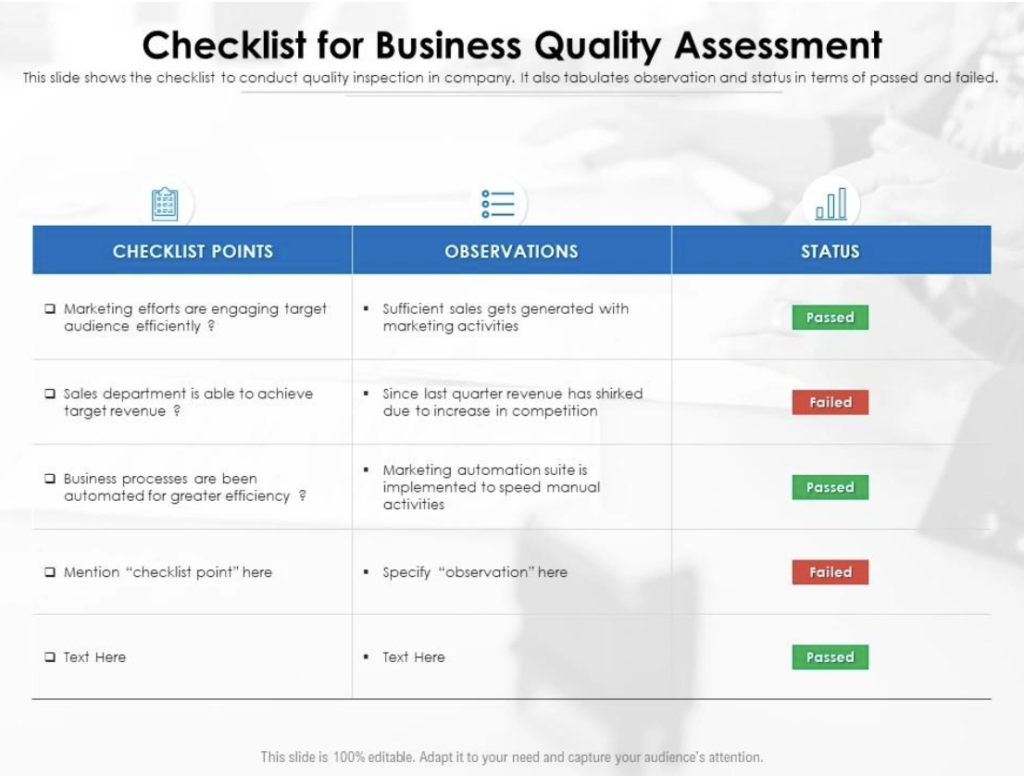
Image Source: SlideTeam
You need to get into your current operations before spending money on extra agents or fancy tools to scale customer support. A full picture of your internal readiness creates the foundation to scale support responsibly.
Audit current support workflows and tools
Start your journey by taking a good look at your existing workflows and support systems. Check if your customer service tools are still needed, well-used, and up-to-date. Take time to examine all automated replies and macros to make sure they match your communication standards.
A well-planned audit helps spot inefficiencies that could grow bigger as you scale. To cite an instance, messy workflows often create bottlenecks when businesses grow, which leads to slow responses and repeated work. These problems frustrate customers and put pressure on your team, which could hurt retention and growth.
Assess team capacity and training gaps
You must know your team’s real capacity. Calculate “shrinkage” first – the gap between scheduled hours and actual productive hours available to handle customer questions. Your team might work eight hours daily in a 22-day month, giving you 176 hours/month. Notwithstanding that, common shrinkage factors could bring actual capacity down to 125 hours/month (29% shrinkage).
Find training gaps through:
- Skills inventory that compares current abilities to needed skillsets
- Employee assessments and feedback collection
- Structured training needs analysis (TNA)
Research shows 80% of call centers now use AI-based solutions to boost customer interactions. These tools can scan call transcripts, customer feedback, and KPIs to find hidden weak spots in agent performance.
Define clear goals for scaling
Measurable objectives guide your scaling process. Don’t just say you want to improve first response time – set a specific target like cutting it by five seconds next quarter. Then create quality standards that balance realistic goals with what customers expect.
Create practical plans with clear timelines by breaking goals into smaller tasks. This makes progress easier to track and helps keep your team accountable. Set clear service level agreements (SLAs) at the same time to decide target response and resolution times for different support request types.
Implement Scalable Support Systems
Your team’s readiness assessment should lead to building systems that can handle increased volume without raising costs. The right implementation creates infrastructure that grows alongside your needs.
Build or optimize a self-service knowledge base
A detailed knowledge base reduces support volume and boosts customer satisfaction. Without doubt, make this your first priority since 37% of consumers feel frustrated when they can’t complete simple tasks on their own. Note that your knowledge base should have tutorials, how-to guides, and FAQ sections in logical categories that make navigation easy—and if the goal is to make those answers easier to discover in modern search experiences, partnering with top AEO services can help structure and optimize the content for better visibility.
Customers can find answers independently through a well-laid-out knowledge base that reduces your support team’s workload. Research shows 91% of consumers would use an online knowledge base customized to their needs. Users should be able to rate whether articles helped them. This feedback provides valuable data to improve continuously.
Use AI and automation to handle repetitive tasks
AI does more than power simple chatbots – it handles complex customer service functions. AI triages customer requests, creates reports, and spots trends in customer and employee activity. Your automation targets could include:
- Greeting customers and confirming message receipt
- Gathering account information
- Password reset assistance
- Simple troubleshooting for common issues
- Routing tickets to qualified agents
We focused on automating high-volume, repetitive questions. To name just one example, Klarna’s AI chatbot manages two-thirds of customer questions and does work equal to 700 full-time agents.
Create a structured onboarding process for new agents
A systematic onboarding program speeds up agent productivity and cuts turnover. Companies with strong onboarding programs keep 82% more new hires and boost productivity by over 70%. Your detailed training curriculum should include:
- Interactive learning modules about products, ticketing systems, and escalation procedures
- Role-playing exercises that simulate common customer scenarios
- Gradual exposure to systems through sandbox environments
- Mentorship pairs with experienced agents
Regular feedback and progress checks help assess new agents during their initial period.
Establish clear communication and escalation paths
Quick routing of customers to the right person makes escalation management work better. Customer trust stays intact when you’re transparent about timelines during escalations. Your internal SLAs should trigger automatic escalation processes for each breach.
Each escalation needs documentation covering problem descriptions, communication history, and resolution steps. This builds a valuable knowledge resource and keeps everyone accountable. Teams should review recent escalations together regularly. These reviews reveal patterns that strengthen your support operations.
Choose the Right Outsourcing Partner
Choosing the right outsourcing partner directly affects how well your customer support scales. Start by selecting a delivery model that fits your budget and coverage needs, such as onshore, nearshore, or offshore support. The right fit should feel like an extension of your internal team, not a disconnected service.
Look for partners with experience in your industry who can integrate smoothly with your existing tools and security standards. Pricing structures also matter, as per agent models often support higher quality interactions than per ticket approaches. Cultural alignment is equally important, since outsourced agents represent your brand in every customer conversation.
Many growing teams explore options like Support Adventure MSP outsourcing when internal capacity starts to limit growth. A short trial period and a dedicated point of contact help ensure service quality stays consistent while performance is tracked against clear expectations.
Turning Support Into a Growth Advantage
Scaling customer support is not a one time project. It is an ongoing discipline that evolves alongside your business. The teams that succeed are the ones that treat support as a strategic function rather than a reactive cost center. They pay close attention to timing, invest in systems that reduce friction, and make thoughtful decisions about capacity before problems surface.
The framework outlined here shows that sustainable support growth depends on preparation as much as execution. Clear metrics, well designed workflows, strong onboarding, and consistent communication all work together to create stability during periods of change. When these foundations are in place, scaling feels controlled instead of chaotic, even as demand increases.
Outsourcing can play a powerful role when internal limits appear, but only when it is approached with intention and clear expectations. With the right structure and mindset, customer support becomes a competitive advantage that strengthens loyalty, builds trust, and supports long term success.