


Specialized ecommerce brands sell to narrow audiences, and that narrow focus creates a real content problem.
A store selling vintage watch parts or medical-grade compression socks can’t rely on viral trends or seasonal hooks the way a general retailer does. Their buyers show up with specific questions, and they show up months or years apart, not all at once.
Evergreen content answers those questions once and keeps answering them, long after a blog post goes live.
Most niche brands still pour their budget into short-lived campaigns, like holiday sale posts, product launch announcements, or trending topics they jump on for a week. These pieces work fast and fade even faster. Evergreen content takes longer to pay off, but it keeps working for years, showing up in searches, AI-generated answers, and buyer research long after the writing is done.
For specialized brands, that long tail matters more than a quick spike ever will.
Evergreen Content Builds Lasting Search Visibility
Niche ecommerce brands sell to buyers with recurring, predictable questions. Someone shopping for compression socks or ski gear searches for the same basics year after year, like sizing, fit, care instructions, and how the product actually works.
Evergreen content answers these standing questions directly, and search engines and AI tools keep surfacing that content long after publication. A holiday promo post loses relevance within weeks, but a well-built guide keeps earning clicks for years. Each month it stays live, it gathers more backlinks, more organic traffic, and more trust signals that push it higher in results.
This compounding effect matters most for specialized brands because their audience is narrow but consistent. A general retailer chases seasonal spikes and viral moments. However, a specialized brand needs steady, qualified traffic from people who already know what they’re looking for.
To put this into practice:
- Map the questions your customers ask most often, whether through support tickets, reviews, or sales calls.
- Turn each question into a standalone guide that answers it completely.
- Update these guides periodically to keep facts and product details current, since freshness still affects rankings.
- Structure content with clear headers and direct answers near the top, so both readers and AI systems can extract the information quickly.
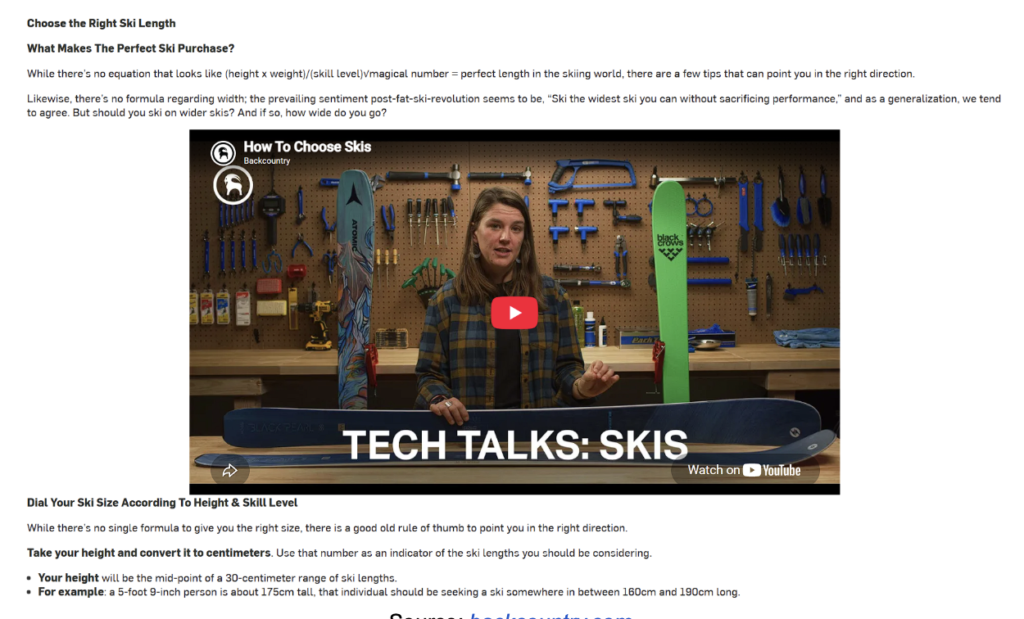
An example of a specialized brand that applies this well is Backcountry, a retailer selling outdoor clothing, camping gear, and ski equipment.
The brand publishes detailed camp guides, packing infographics, and meal-planning instructions. Its ski size guide breaks down how length affects turning speed, stability, and maneuverability, and uses the skier’s height as a simple reference point for finding the right fit.
This kind of specific, lasting instruction keeps pulling in search traffic long after it’s published.
Educational Resource Libraries Help Customers Plan Major Purchases
Complex, high-ticket products come with a research phase that can stretch for weeks. Buyers want to understand materials, sizing, installation, and long-term maintenance before they commit any money.
Specialized brands that build out full educational hubs give customers a place to work through these questions on their own schedule, without pressure from a sales rep or a countdown timer on a promo. That self-paced research builds real confidence, and confident buyers convert at higher rates and return fewer orders.
Research finds that consumers are 131% more likely to buy from a brand right after they consume early-stage, educational content. That’s a strong case for building resource libraries instead of chasing short-term promotions.
And unlike a sale campaign, a planning guide or FAQ page doesn’t expire. It might need a fact check or a formatting update once or twice a year, but the core content keeps serving new visitors for as long as it stays accurate.
To build your own hub:
- Start with the questions customers ask before they buy, not after.
- Group these into categories like sizing, materials, installation, and cost, then write a dedicated guide for each one.
- Link the guides together so readers can move naturally from one topic to the next.
- Keep the language plain and skip the sales pitch, since the goal here is to inform, not push a purchase.
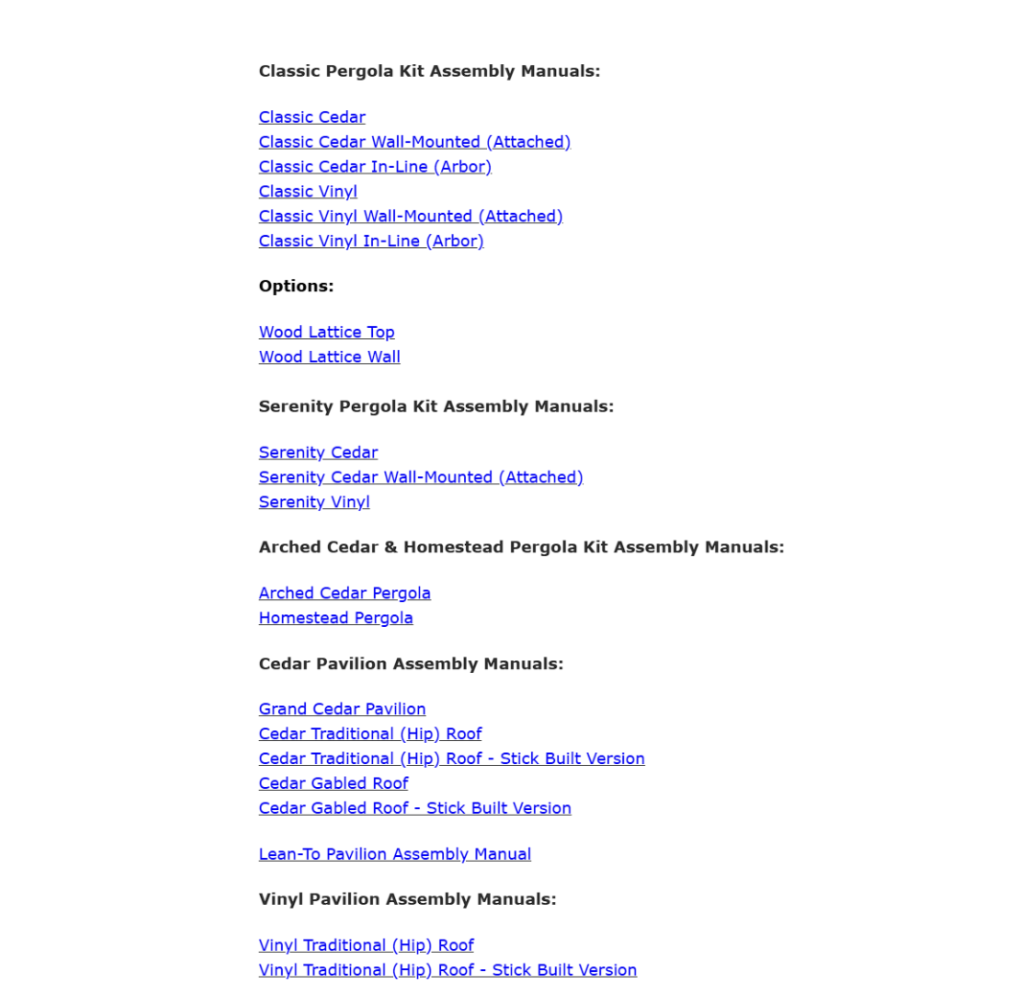
Pergola Kits USA, a company selling ready-to-assemble pergola and pavilion kits, built exactly this kind of resource.
Their site includes a full learning center that walks customers through planning a custom pergola project, covering everything from material choices to permitting, well before anyone adds an item to their cart.
Practical Maintenance Resources Keep Customers Returning
The sale doesn’t have to be the end of the relationship. Once a customer owns a product, they still need to know how to care for it, and that need doesn’t disappear after checkout.
Evergreen maintenance content meets that need directly, giving customers a reason to come back to your site long after their order arrives. Each return visit reinforces the idea that your brand supports the full life of the product, not just the transaction.
This kind of ongoing support pays off in measurable ways. A positive post-purchase experience raises customer satisfaction and makes repeat purchases far more likely, since people naturally return to brands that helped them get the most out of what they already bought.
To build these resources:
- Think through the full lifespan of your product and identify the points where customers commonly run into trouble.
- Write clear, step-by-step guides for routine care, seasonal upkeep, and common fixes.
- Include specifics like timelines, tools needed, and warning signs to watch for, so the content stays genuinely useful instead of vague.
- Link these guides from your product pages, order confirmation emails, and packaging inserts, so customers can find them exactly when they need them.
Golf Cart Tire Supply, a company that sells golf cart tires and accessories, demonstrates this well.
Their golf cart maintenance guide lays out a full schedule of weekly, monthly, and yearly tasks, covering everything from battery water levels to brake inspections.
The guide stays useful for as long as a customer owns their cart, keeping the brand relevant well past the original sale.
Buying Guides Simplify Complex Product Categories
Specialized product categories come with their own vocabulary, which often stands between a shopper and a confident purchase. Terms like grain direction, waist width, or top notes mean nothing to a newcomer. That confusion leads to hesitation or abandoned carts.
Evergreen category guides solve this by breaking down terminology, classifications, and key differences in plain language. The goal is to help shoppers understand the category well enough to make their own choice, and that shift in focus is exactly what builds trust.
When a guide stays purely educational, readers don’t feel like they’re being sold to, and that lowers their guard. They read to learn, not to compare prices, and once they understand the category, choosing a product feels natural instead of overwhelming.
To build one:
- List the terms and distinctions your customers ask about most, whether that’s material types, sizing systems, or product classifications.
- Explain each term clearly, using comparisons within the category instead of outside analogies.
- Skip CTAs within the body of the guide, and let the education stand on its own.
- Link to relevant products only where a reader would naturally want to explore further.
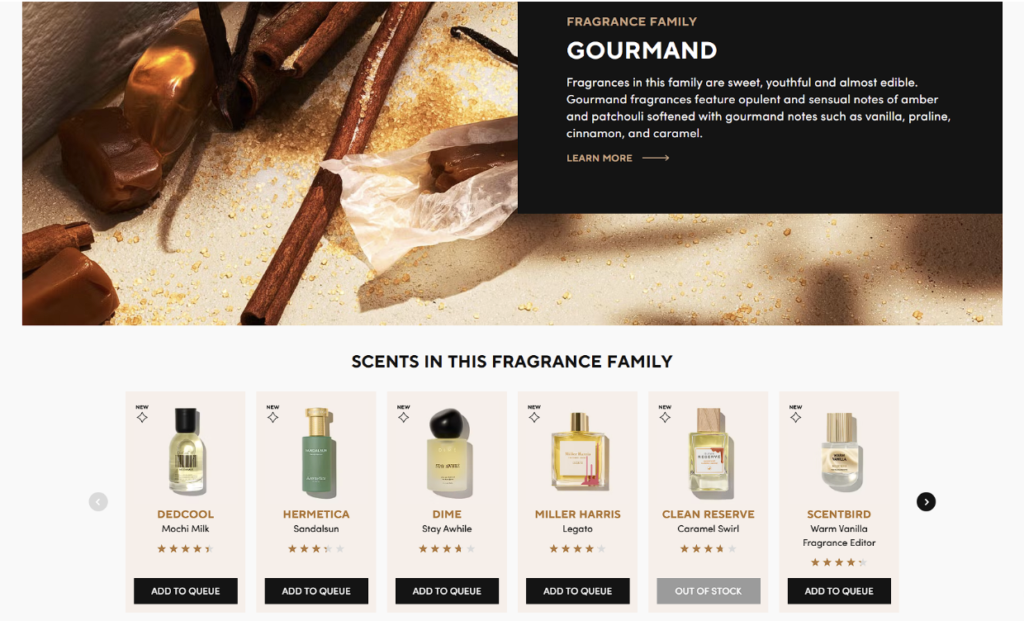
Scentbird, a fragrance subscription service, built exactly this kind of resource with its fragrance family encyclopedia.
The page sorts perfumes into groups like florals, woods, ambers, and gourmands, explaining what defines each one and which notes appear most often. Readers leave with a clearer sense of their own preferences, and the linked products feel like a natural next step rather than a sales pitch.
This kind of content stays relevant for years, since the fundamentals of a product category rarely change even when specific products come and go.
Industry Education Positions Brands as Trusted Authorities
The most effective evergreen content skips product promotion and teaches the industry itself. When a guide covers broader principles instead of pushing a specific item, it earns a different kind of trust.
Readers recognize when a brand is genuinely trying to help them understand a topic. That recognition carries over into how they view the brand later, even if they’re not ready to buy anything yet.
This approach is amazing for earning backlinks. Other sites, blogs, and educational resources link to comprehensive guides because those guides serve as reference material, not sales pitches. Each link adds to the brand’s authority and search visibility, and that authority compounds the same way the content itself does.
To apply this:
- Pick a topic your customers need to understand regardless of whether they buy from you.
- Write it the way an industry expert or teacher would, covering principles, techniques, and context rather than features or pricing.
- Leave your products out of the body of the guide entirely, and let the depth of the content speak for the brand’s expertise.
- Publish it as a standalone resource, and update it periodically to reflect current best practices.
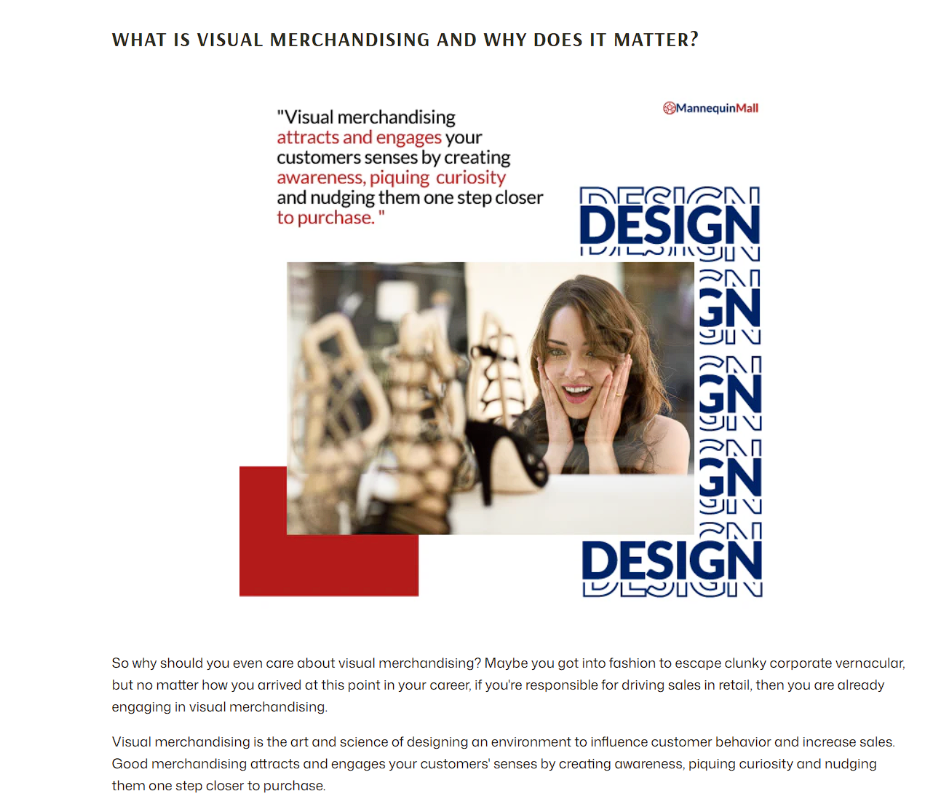
Mannequin Mall, a retailer that offers fashion mannequins and store display forms, built exactly this kind of resource with its guide to visual merchandising and window display design for retailers.
The guide covers display techniques, storytelling, and design principles in real depth, and the brand doesn’t mention itself or its products a single time within it.
Readers who arrive through this type of content may take months to become customers, but they remember which brand taught them the fundamentals.
Evergreen Content Continues Delivering Business Value Over Time
Evergreen content earns its keep by sticking around. Its real advantage shows up in the refresh cycle.
Instead of writing something new every few months, a brand can update statistics, swap in current examples, revise FAQs, and refresh visuals on a piece that’s already ranking. This costs far less than starting from scratch, and it keeps the content accurate without losing the search authority it’s already built up.
For specialized ecommerce businesses, this efficiency matters because content teams are often small and budgets are tight. A single well-built guide can serve customers for years if it gets periodic attention instead of being left to go stale. The core structure and research stay intact, while the details around it stay current.
To put this into practice:
- Set a recurring schedule to review your top-performing evergreen pieces, ideally every six to twelve months.
- Check that statistics are still accurate, swap outdated examples for current ones, and update any product references or industry standards that have shifted.
- Add new FAQs based on recent customer questions, and refresh screenshots or diagrams if the visuals look dated.
- Treat these updates as maintenance, not a full rewrite, since the goal is to keep the piece current, not replace it.
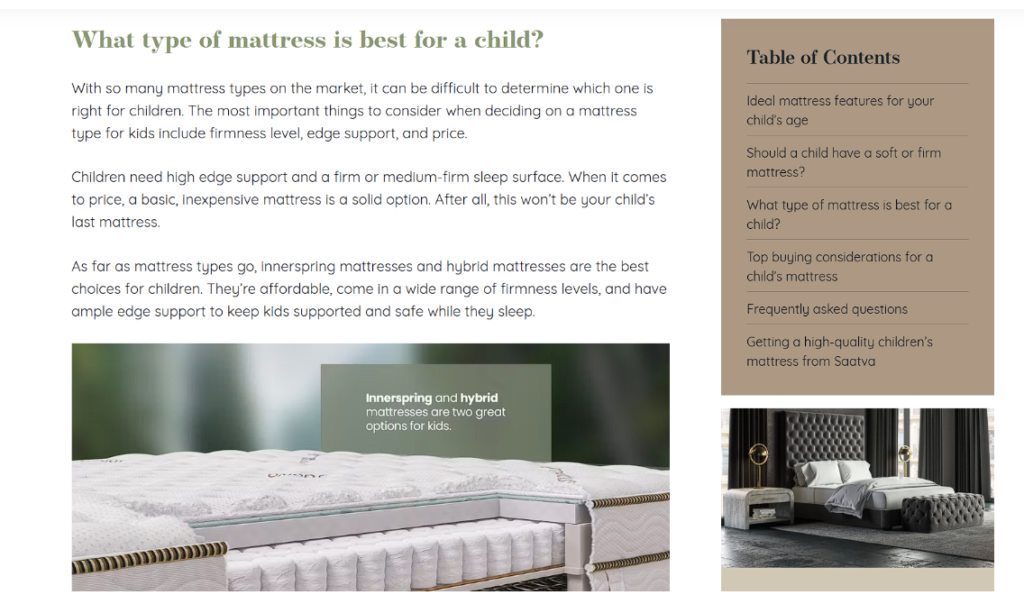
Saatva, a luxury online mattress and bedding brand, shows how this works with its guide on choosing a mattress for a child.
The guide walks parents through mattress size, firmness, material, edge support, and price in a way that stays relevant no matter what year it’s read. As bedding materials and safety standards evolve, Saatva can update the guide instead of writing a new one, keeping it a useful resource indefinitely.
That’s a better method than producing constant new content that never has time to accumulate authority.
Final Thoughts
Specialized ecommerce brands don’t need constant new content to stay visible and trusted. A well-built library of guides, FAQs, and educational resources keeps working long after the initial investment, answering the same customer questions for years with only occasional updates.
All of our examples show different versions of the same idea: teach first, and the trust and traffic follow.
For niche brands with narrow but consistent audiences, that approach delivers more value over time than any short-term campaign ever will.